“Ya’ know that old trees just grow stronger,
And old rivers grow wilder ev’ry day.
Old people just grow lonesome
Waiting for someone to say, “Hello in there, hello.”
John Prine, Hello in there.
There is an old path beside the river, that was once a route for the blind. This short trail used to have galvanised steel handrails, and the path meanders along level ground, once neatly mown and well maintained. The railings are gone now. The facilities are in total disrepair and the nearby picnic site has fallen into disuse and neglect. It is at once an accurate representation of not only our country’s steep decline, but also the decay of our social fabric. That such a noble endeavour should become disused and neglected, reflects in a near silent, but forlorn echo of a long-departed boom. It is a sound that reverberated in my head when we visited recently, like the din of true silence is apt to do. My mind reached out across the wooded floodplain, trying to make sense of its abandonment. It once held the vibrancy of human conquest, where people were corralled by the beat markers necessitated by popularity. There was news on how the river fished yesterday, and the day before, and last weekend. Pool names and lost fish were the stuff of legends kept alive in a tapestry of stories and tit bits that are the currency of practising outdoorsmen.
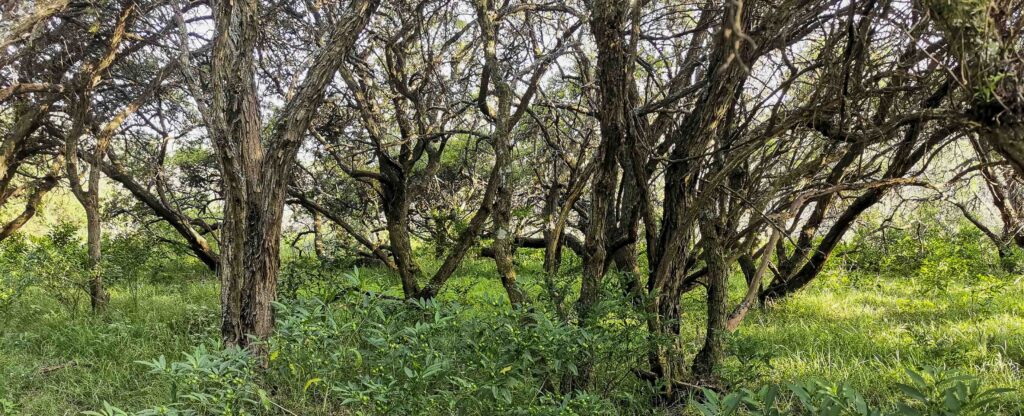
I fished it as a boy. The picnic site was sometimes full to capacity. The game guard wore boots that shone, and he busied himself ushering visitors to the last open braai site, and suggesting where they might park their car, out of the hot sun. He brimmed with pride as the car nudged into the shady bay he had pointed out in the ntshitchi scrub. I was in that car. I brimmed with anticipation. The family would picnic, but the Trout river was hidden in the scrub of this wooded floodplain, very close to where we were, and that fact captivated me with an undefeatable tug.
Fifty years later, I stood on what remains of the path, trying to image the long-gone handrail. I closed my eyes for a moment to try to appreciate this place in the mind of a blind person. I quickly felt my balance compromised, but there was no handrail to reach for. The sounds suddenly amplified. There were small birds flitting through the undergrowth. There was the stirring of air, and a very slight rustle of leaves. But I struggled to hear it above the music of the river. There were melodic bubbling sounds coming from up ahead somewhere. They were compound sounds, probably made by water held back by fallen branches, and then forcing its way under, over and around the obstruction. Those lyrics were complimented by a sound of sucking, lapping and gliding from the water close to where I was standing. But the subtlety of both was stolen away by the distant rush of a rapid somewhere off downstream. There was the click and scrape and tick of unknown insects and rodents working the cool shady undergrowth. I opened my eyes.
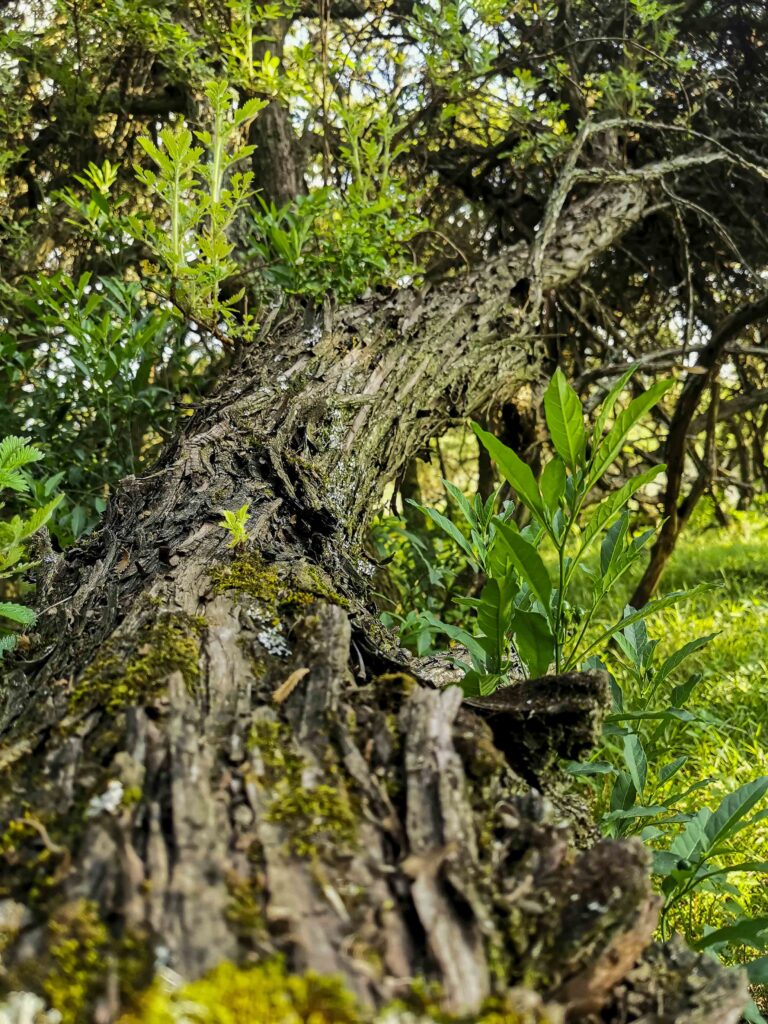
The bush is thick here, and wild, and varied. Tall reeds intermingle with nanna-berry and sage and ouhout, and lush green grasses creep underneath. There is an overwhelming tapestry, woven of the various shades of high summer green, but in breaking through the undergrowth in search of the river, the dry, the brown, and the dead come to the fore in a rustle, a crack and the snap of a dead bough. Brushwood left by countless floodwaters clings to branches everywhere. The vertical cut of the riverbanks speaks of powerful flows. Sliding down a muddy slope into the channel below, without any idea of how or where you may get out, introduces a sudden sense of vulnerability. There I am, trapped within the walls of the main channel, with the tame and pretty flow of a beautiful river tugging at my longs, but with the prospect of sudden, high and fearful flood waters lingering in the recesses of my mind. It is a mildly claustrophobic place I suppose, but I have to say that my thoughts were tuned more to a mindset of exploration. The river here twists and writhes in a way that has you marvelling at its confusion and pain of indecision in choosing its path. Every spot at which I managed to enter the river channel to flick a fly, gave me only a close and intimate vista. Everything lay ahead, hidden around the next bend. One of countless unpredictable bends. When I extracted myself to further away from the river to try to get a sense of where I was, and which way was north, my efforts were thwarted by the flat wooded plain, and I would re-discover the river only to find that it seemed to be flowing the wrong way.
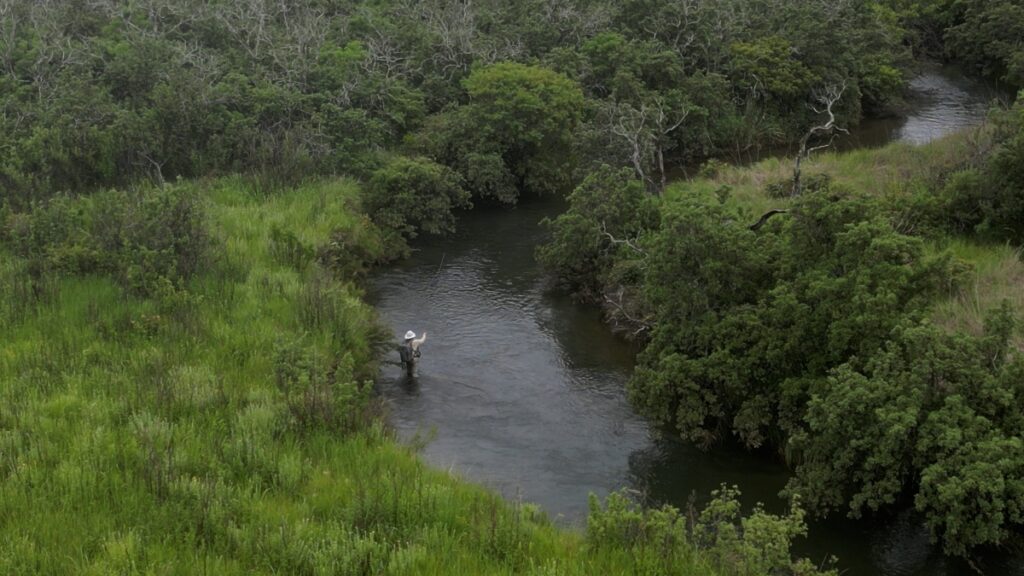
Back in the cool clear gliding water, it was all about deep green shade over undercut banks. Casts were at best, difficult. The most pleasing ones went in under the bank a little, but never as far as I had hoped. The fact that I hadn’t snagged a tree should have been ample recompense, but I would manage the drift with a nagging sense that my limited skill was depriving me of some epic success. Some spotted leviathan befitting of the rediscovery of this gnarled and tangled place. Some wonderful and powerful brown Trout of which we would all be saying “Well, we always suspected there were lunkers hiding in there” with a smug nod, or the clucking of envy. The Uncle George of old.
“Every angler is an expert in the husbandry of hope, doling it out one spot, one cast, one fly at a time”
Ted Leeson.
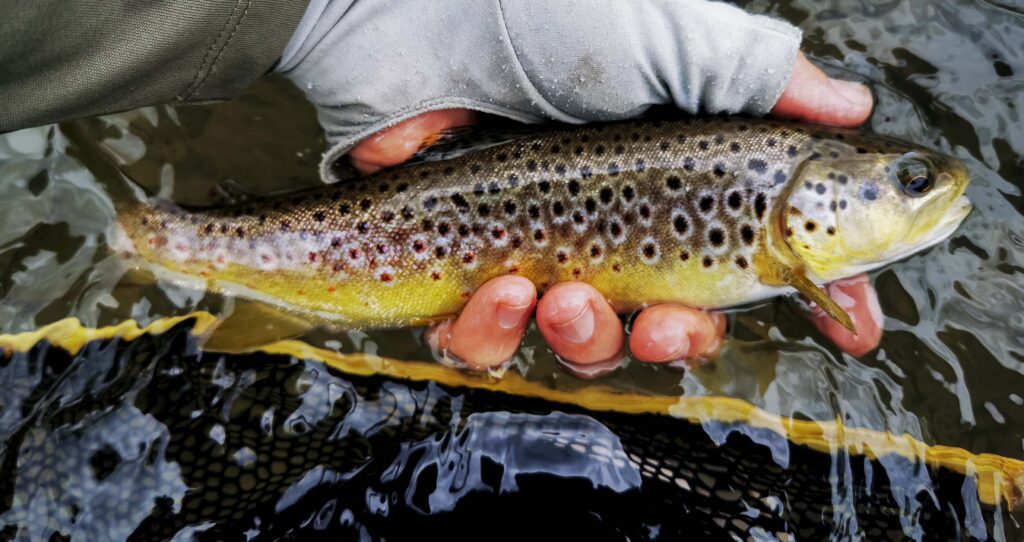
But the trout were small, wary, and furtive in their exploratory plucks at the fly. The ones that came to the dry were secretive to the point of being able to suck the imitation down in a way that barely left a dimple. I had to be on my game. Focused on the fly. It drifted in and out of deep green pockets crossing silver surface patches in which it disappeared from view altogether. I craned forward, peering at my offering through all the sensory distractions. Only twenty yards of river were visible ahead of me. The bankside vegetation embraced me in the scene. I was alone in a sensory bubble that the rest of the world would not know exists. The quick take, when it came, was sometimes followed by an immediate dash of the fish straight at me. I simply couldn’t retrieve the line fast enough. One of them bumped into my leg, and I think that may have been after it spat the fly. I photographed just one of the fish. It was remarkable only for its tiny spots, that somehow revealed themselves to me as miniatures of something that belonged on the elusive leviathan I had cultivated in my mind. For the rest, the day was one of immersion in this place; This place immune to settlement. Immune to decay. Immune to the human constructs in the mind of a nostalgic river fisherman. This tangled, barely penetrable jungle of tossed and shredded foliage, river sand, and sliding water. This place of old wood and river music.

3 Responses
A sombre piece, Andrew, but it sounds like my sort of place!
Hi Andrew
This seems to be the place as I remember it. Used to be managed by the Wrights.
Bumped into Tom Sutcliffe sometimes, we both had Hardy’s built cane rods and were experimenting with dry flies and nymphs.
Caught a 4 and a half pound brown in Uncle George’s Stretch (the stretch below where the hatchery was established — now defunct).
Not sure if I should mention the name of the venue but probably in the upper Mooi
Tight lines for 2026
Kind regards
Noel
Spot on Noel! You have proper history with this place!