I started tying this pattern about 10 years ago. The idea was to have a smooth body, and at one stage the thorax was smooth too, to represent the exoskeletal properties of the naturals. In other words I wanted to steer away from a “fuzzy” fly, and stick with a sleek profile, with well defined eyes and legs. This sleek profile helps the fly to sink with minimal additional weight: a worthwhile property, in that it allows for delicate presentations in the shallows.
I started off with a single plastic bead at the front, and then moved to a set of bead eyes. These tended to fall apart, but with the advent of UV glue, I think we have solved that problem.
I still tie the pattern in a number of different ways. Here is one of them:


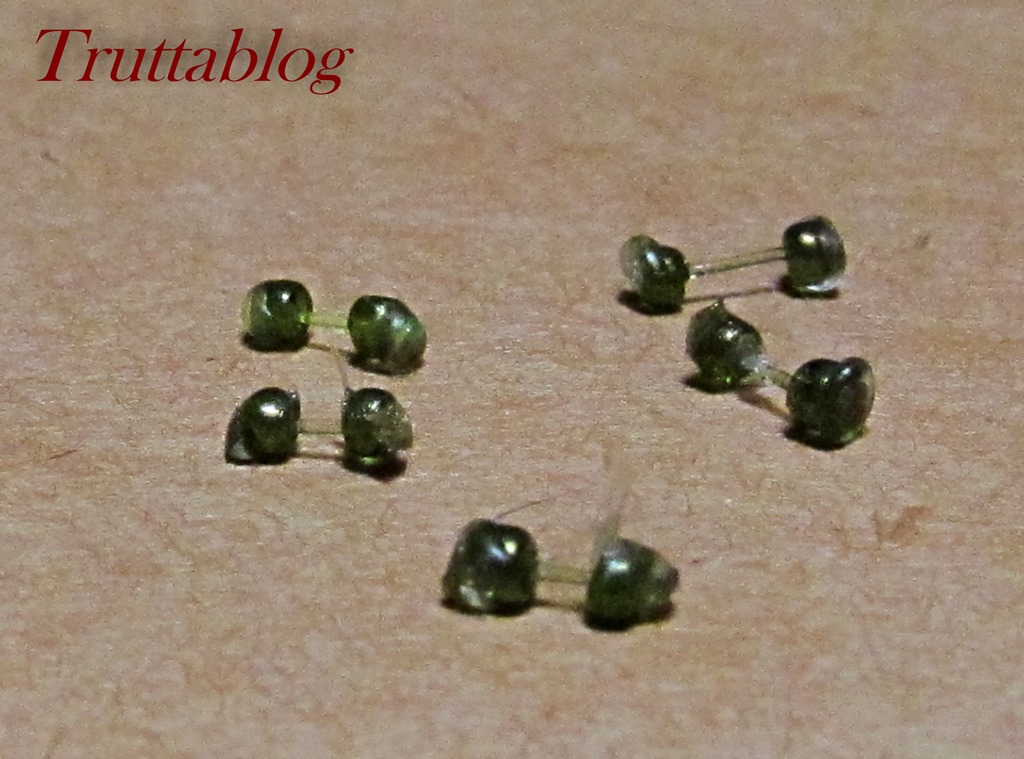
I prepare eyes by melting the ends of a short piece of mono, with small beads threaded on to it. It is wise to prepare a whole batch of them beforehand, for use on a number of patterns.

The beads are inclined to come off, so hold them in some tweezers and coat the whole assembly with some thin UV glue.

Secure with more UV glue, or varnish.
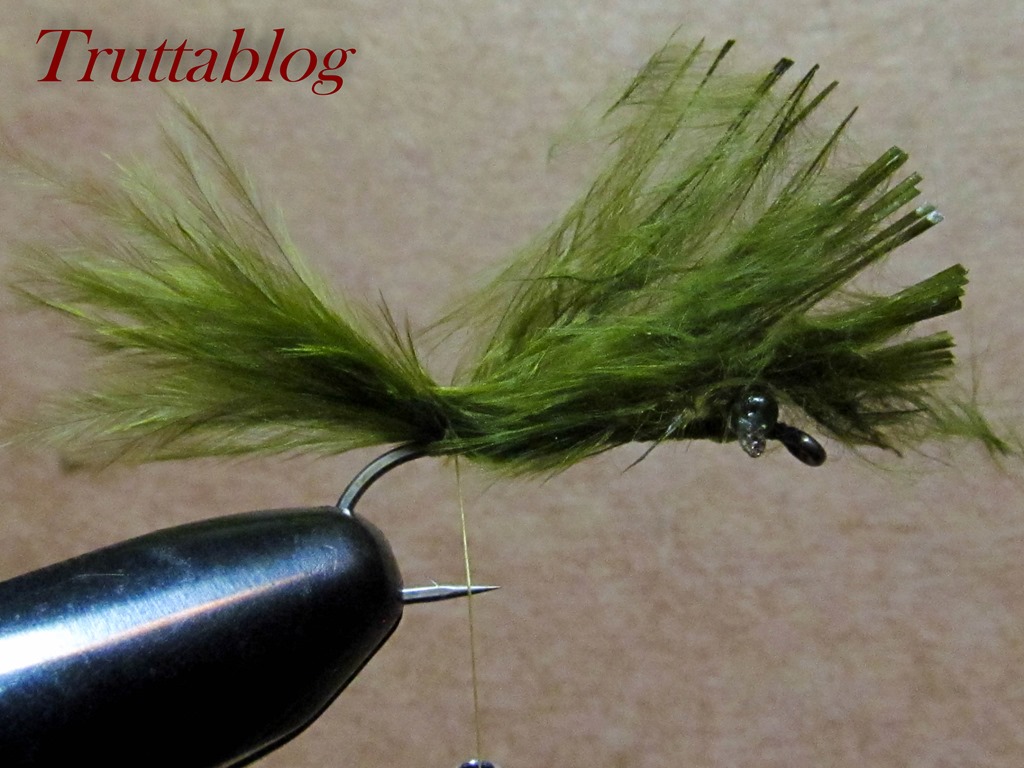
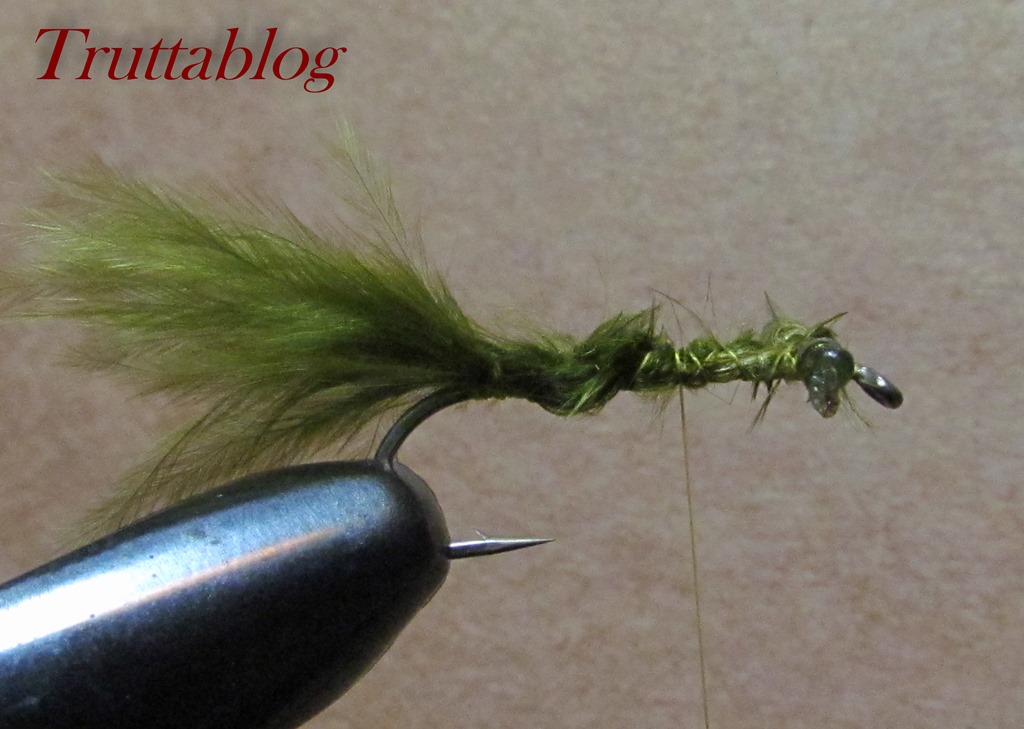


Tie in the floss with a strand of Hends body quill or similar flashy material, and the copper wire rib.


Wrap some more of the copper around the eyes for a little bit of extra weight.
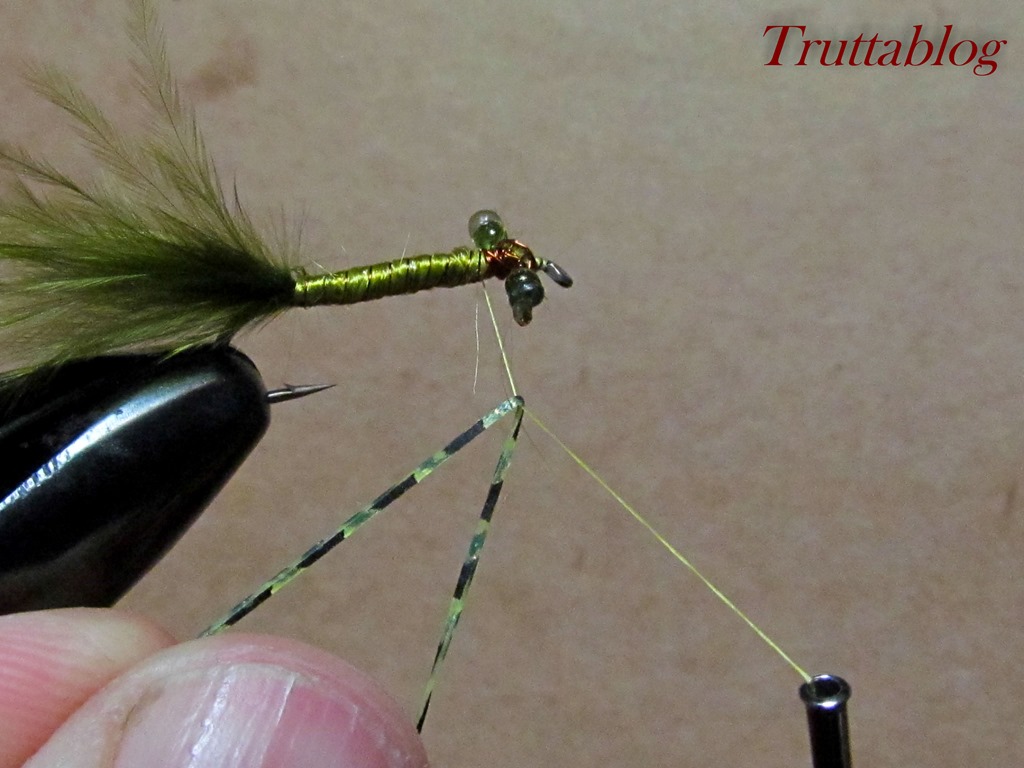


Note the method for positioning the legs exactly where you want them.

I often continue with floss through the thorax, but on a whim, I used some SLF dubbing.


One should perhaps use some “nymph skin” over the thorax, but I dispensed with that here.


2 Responses
I like the step-by-step for tying this fine pattern.
Thank you